Taste Is a Skill
“I know what I like” is a perfectly reasonable thing to say. But I think it's worth asking how we came to like it.
We talk about having an eye for design, an ear for music or a good palate as though these were things we were born with. Some people have taste. Others, presumably, must make do.
I'm increasingly convinced that much of what we call taste is learned. What looks like instinct is often the result of having spent a lot of time paying attention.
Learning to notice
Clothing has been a particularly interesting example for me. The more I learn about it, the more there is to see.
A jacket stops being simply a jacket. I start noticing how it hangs, where it fastens, the width of the lapels and how its proportions relate to the trousers. An outfit I might previously have described as “looking good” becomes a collection of decisions I can begin to understand.
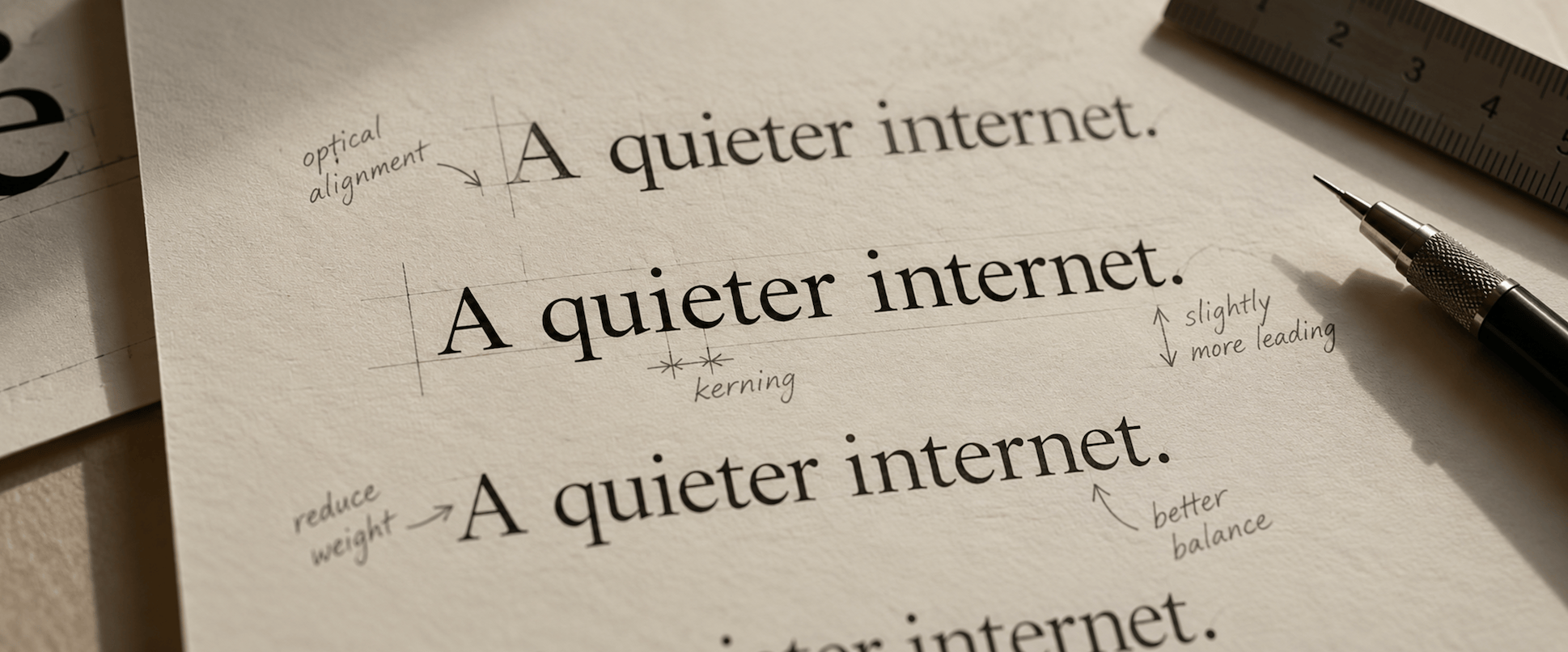
The same thing happens with typography. Two typefaces might initially look interchangeable. Spend some time looking at them, comparing them and learning a little about their construction, and the differences become difficult to ignore.
Exposure gives you something to compare against. Vocabulary helps you identify what you're seeing.
You don't need to know the word leading to feel that a page is cramped. But learning about the space between lines gives you somewhere specific to look, and something specific to change.
A vague impression becomes a judgement you can explain.
Knowing what you like
Once you can recognise these differences, your preferences become more interesting.
Instead of simply liking one jacket better than another, you can start asking why. Is it the shape? The fabric? The way it fits? Would you still prefer it with a different pair of trousers?
Sometimes the answer confirms a preference. Sometimes it changes one.
This doesn't mean that learning enough will eventually lead everyone to the same conclusions. Understanding wine doesn't oblige you to prefer Barolo. Understanding typography doesn't mean using the same three typefaces forever.
Nor is recognising that something is well made the same as liking it.
The point is to develop enough references and understanding to make your own judgements. Rules can help, but memorising somebody else's preferences isn't quite the same as developing taste.
Eventually, I suspect, much of this becomes intuitive again. You notice that something works without consciously examining every detail.
But it's an intuition you've spent time educating.
A bigger world
What appeals to me about all this is that learning gives you more things to enjoy.
A suit contains more decisions. A building reveals details you would previously have walked past. A piece of software becomes interesting not just for what it does, but for the hundreds of small choices that make it pleasant to use.
You haven't changed the object. You've increased your ability to perceive it.
That seems rather encouraging. “I don't have an eye for design” doesn't have to be a permanent condition. You don't need to become an expert, either. You can start by looking more closely at things you admire, comparing them and asking why one works better than another.
Occasionally, it helps to spend time with something you don't immediately like.
Taste isn't simply something you either have or don't.
It's what happens when you learn to pay attention.